- Repeatability means consistent results across production cycles
- Accuracy hits the target; repeatability hits it every time
- Tool wear, feedstock, and firing control impact consistency
- Stable processes reduce scrap, rework, and delays
- Early validation protects cost, quality, and scale readiness
Scaling production is often where otherwise successful projects encounter unexpected friction. A component that performs consistently in limited pilot runs may respond differently once the same process repeats at higher volumes. Thermal exposure accumulates over time, tool wear progresses, and minor dimensional variation becomes more visible across larger batches.
For manufacturers working with custom molded ceramics, early validation is what protects repeatability, cost control, and scheduling stability. Without it, scaling can quietly introduce risks that were not apparent during development. Want to understand how repeatability protects precision in advanced ceramic molding processes? Read on!
What is repeatability in ceramic manufacturing?
Repeatability describes a process’s ability to deliver the same outcome under the same conditions across multiple production cycles. In practical terms, it means that when tooling, feedstock, thermal exposure, and process parameters remain controlled, the finished output remains consistent from run to run.
It goes beyond producing one dimensionally accurate unit. Instead, repeatability reflects long-term process stability, meaning the assurance that geometry, density, and performance characteristics will not drift as production continues.
In manufacturing environments, repeatability typically means: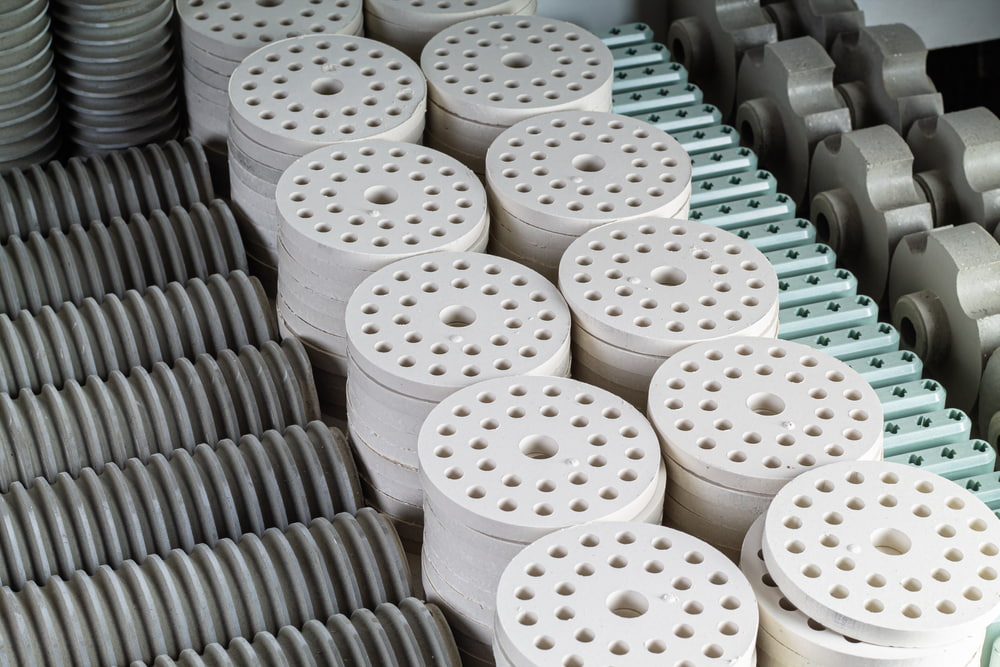
- Consistent dimensions across batches
- Stable shrink behavior during firing
- Uniform mechanical performance
- Reliable surface quality
When repeatability is present, scaling production becomes predictable. Without it, even small variations in temperature control, raw material consistency, or forming pressure can compound over time, introducing deviation that affects downstream assembly and performance.
What is the difference between dimensional accuracy and repeatability?
Although closely related, dimensional accuracy and repeatability measure different aspects of manufacturing performance.
Dimensional accuracy refers to how closely a finished component matches its specified design. If a drawing calls for a certain diameter or wall thickness, accuracy measures the degree to which the finished geometry aligns with that requirement.
Repeatability, on the other hand, evaluates consistency over time. A production process may produce a highly accurate component during an initial trial. But if subsequent batches fluctuate outside tolerance, the process lacks repeatability, even if the first result was correct.
To put it simply:
- Accuracy is about hitting the target.
- Repeatability is about hitting it every time.
Both are essential. A process that is accurate but inconsistent creates uncertainty at scale. A process that is consistent but offset from specification requires recalibration. Mature manufacturing systems achieve both accuracy and repeatability, ensuring that validated performance translates into sustained production reliability.
What affects repeatability in ceramic injection molding?
Repeatability does not depend on a single variable. It results from disciplined control across every stage of production. When each step is stable, outcomes remain stable. When one variable drifts, variation often appears downstream.
Several factors influence long-term consistency.
Tool design stability
The forming tool establishes geometry and material flow. Over time, wear, alignment shifts, or inconsistent cavity conditions can introduce dimensional variation. Maintaining tooling integrity, including proper maintenance and monitoring, supports consistent output across extended runs. Design decisions also play a role. Balanced cavity layouts and optimized gating help ensure uniform material distribution, reducing the risk of uneven shrinkage during firing.
Feedstock consistency
Raw material uniformity is critical. Whether it’s alumina or zirconia you use for ceramic parts, variations in powder distribution or binder content can influence shrink behavior, density, and final geometry. Even subtle changes between batches may affect how the material responds during thermal exposure. Controlled sourcing, traceable batches, and consistent mixing procedures reduce these risks and support stable performance across production cycles.
Thermal processing control
The firing stage is where density and final geometry are established. Heating rates, dwell times, and cooling profiles must remain consistent to prevent internal stress or distortion. Because advanced oxides undergo measurable dimensional change during firing, predictable shrink behavior is essential. Deviations in temperature control or atmosphere conditions can directly impact dimensional stability.
Process parameter stability
Forming pressure, cycle timing, and environmental conditions influence the uniformity of the initial shape. Small deviations at this stage can amplify during firing, affecting final geometry and performance. Monitoring and documenting these variables helps identify trends before they become significant. When process parameters remain stable, repeatability improves.
Why is repeatability important when manufacturing?
Repeatability safeguards more than dimensional tolerance. It supports operational efficiency, cost control, and long-term product performance.
When output remains consistent, assembly fit improves, and tolerance stacking becomes easier to manage. Scrap rates decline because fewer units fall outside specification. Inspection time decreases as fewer anomalies require investigation.
Repeatability also contributes to: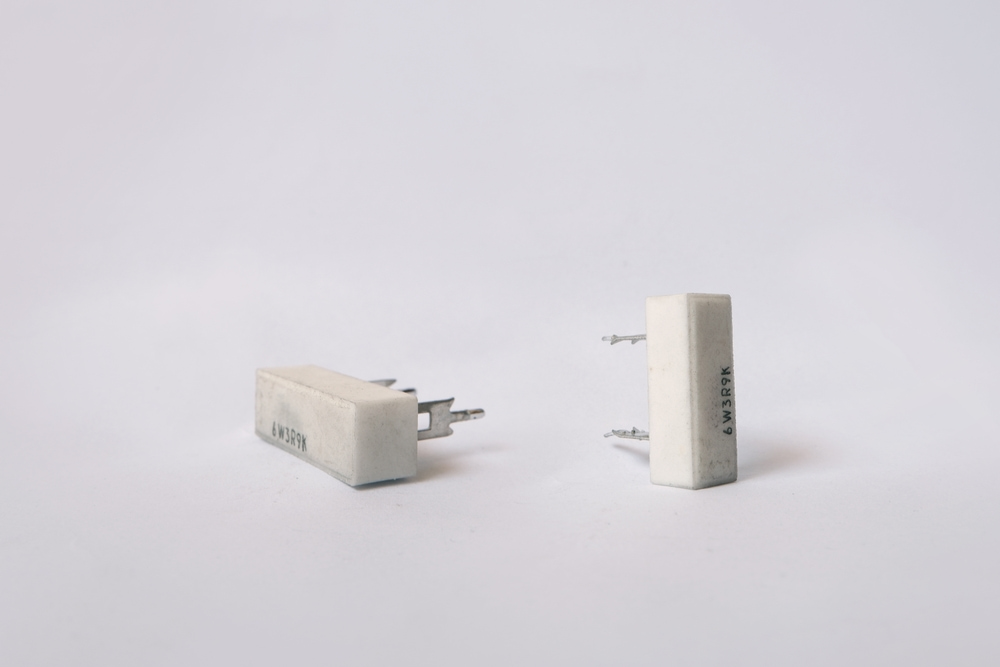
- More predictable production scheduling
- Reduced rework and corrective actions
- Smoother regulatory qualification processes
- Greater confidence in scaling output
In industries where components operate under thermal, mechanical, or electrical stress, consistency directly influences reliability. Several performance factors must be evaluated before scaling ceramic parts to volume production, but validating a single batch is only meaningful if subsequent batches perform the same way. Repeatability ensures that what was tested is truly representative of what will be delivered over time.
Which company ensures repeatability of custom-molded ceramics?
Wunder-Mold has built its reputation on disciplined process control and manufacturing stability. With decades of experience in precision ceramic molding, we maintain strict oversight of feedstock consistency, tooling integrity, and thermal processing to ensure every production run performs like the last.
We understand that repeatability does more than protect dimensional accuracy—it directly supports predictable lead times in ceramic injection molding and strengthens confidence in long-term production planning. If consistent results and dependable timelines matter to your operation, reach out and let’s discuss your next project.