As digital tools and smart technologies converge, new trends continue to emerge, reshaping not only the principles of rapid part iteration – but also how mold injection companies approach the designing and refining of parts before full-scale tooling.
Today, we’ll explore digital twin simulation, mold flow analysis, and virtual testing – the Top 3 Emerging Trends that are redefining rapid prototyping and evolving the mold injection industry as a whole.
What are the emerging trends in rapid part iteration?
Over the past couple of years, the field of mold injection has welcomed numerous revolutionary improvements, from advanced automation for in-line quality control to smart solutions in secondary processes. However, our Top 3 are improving the core principles of rapid prototyping – a core process used to optimize part quality before full-scale production.
How can digital twins speed up part iteration?
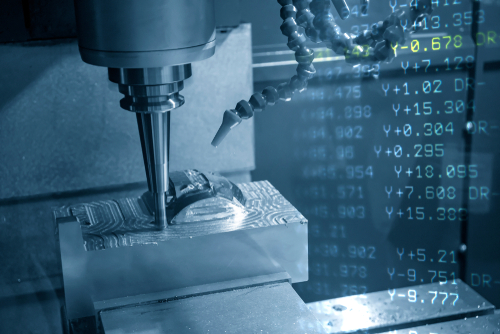 Digital twin models are a virtual representation of the part, mold, and production environment, whose purpose is to enable engineers to explore design changes before any machining and tooling take place.
Through a combination of multiphysics modeling, AI-assisted optimization, and cloud integration, these advanced simulations help significantly shorten development time, reduce material waste and costs, and speed up decision-making.
They achieve this by providing instant, data-driven insights that reveal the design’s behavior and performance under real conditions, as well as any manufacturability constraints early in the design process. As a result, multiple rounds of physical sampling can be skipped completely, without any repercussions.
What is mold flow analysis in injection molding?
Another simulation technique, mold flow analysis is widely used by engineers to predict how molten plastic will behave inside a mold cavity. It simulates and evaluates a whole host of factors critical to part quality and manufacturability, including:
- Flow paths and fill patterns;
- Gate/runner performance;
- Cooling behavior and hotspot formation;
- Shrinkage, shear stress, and warpage.
This technique became essential because it can help “catch” an array of defects (e.g., weld lines, trapped air, sink marks, short shots, etc.) before actual, physical molds hit the production line, thereby helping dramatically reduce scrap, remanufacturing, and overall production costs.
What is virtual testing in injection molding?
Virtual testing is yet another technique that eliminates the need for a physical prototype, while allowing manufacturers to validate a new part’s structural, thermal, and usability characteristics. This method uses a set of digital tools to conduct a series of tests, such as:
- Finite Element Analysis (FEA) (evaluates strength and deflection);
- Thermal simulation (evaluates cooling and heat distortion);
- Fatigue & lifecycle simulation (evaluates durability);
- Drop or impact tests (for consumer applications).
So, instead of wasting time and resources on multiple prototype cycles, engineers can now simulate hundreds of scenarios, narrowing down the optimal design before any cutting takes place.
What are the benefits of digital twins, mold flow analysis, and virtual testing?
By utilizing these three advanced tools, mold injection manufacturers stand to gain massive advantages, including:
- Reduced material waste;
- Minimal need for costly reworks;
- Faster design cycles;
- More predictable production;
- Improved product quality;
- Lower upfront tooling costs.
In other words: digital twins, mold flow analysis, and virtual testing enable companies to move from concept to functional product faster and with more confidence – exactly what is needed in today’s hyper-competitive market.
Who are the veritable leaders for injection mold manufacturing in California?
 Wunder Mold combines three decades of experience with the latest methods and cutting-edge technologies to deliver high-quality, reliable molded parts for a diverse range of industries. You can count on our team to work lockstep with you to understand the unique requirements of your project and develop the exact parts you need to enhance your operations. We cater to customers in all parts of California from our HQ in Solano County, ensuring swift project completion and delivery. Reach out to us today, and let’s get started on your project!