When engineers plan for extreme heat, the material behind a design often determines whether a project succeeds or fails under pressure. Metal has long been the default option, yet once temperatures climb high enough, its limits start to show in ways that can compromise an entire application.
That’s where dependable custom ceramic parts step in, offering a level of heat resistance that many metals simply can’t match once conditions turn severe. Recognizing where that advantage matters most can change how an entire project gets designed from the ground up.
Keep reading to find out how ceramic survives where metal fails.
How do ceramic parts compare to metal in thermal applications?
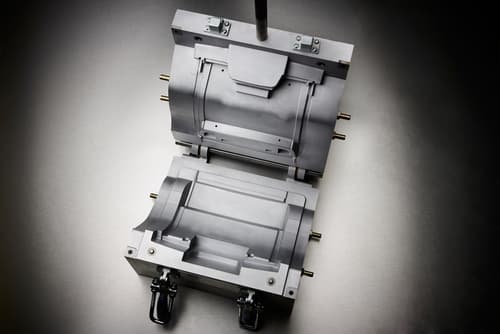 When components face extreme heat, the material behind them determines whether they survive or fail under pressure. Metal has long been the default choice for demanding thermal environments, but it isn’t always the strongest performer once temperatures climb high enough to test its limits.
A non-metallic alternative handles many of these same conditions in a completely different way, and understanding those differences explains why certain applications are moving away from metal altogether.
Melting point differences
Metal reaches a defined melting point, and once that threshold is crossed, structural integrity collapses within moments.
Many advanced technical materials used as thermal alternatives don’t behave the same way at all, since they pass through far higher temperature ranges before any real structural change begins. This gap becomes especially important in environments where equipment must hold its shape and precision under continuous heat exposure.
Facilities producing these advanced components often rely on processes built for consistency at scale, similar to how manufacturers focused on scaling from small batches to bigger runs manage to hold uniform quality across thousands of units regardless of complexity.
Thermal expansion behavior
Metal expands noticeably as it heats up, and that expansion has to be accounted for in any assembly where tight clearances matter. A shift in size, even a small one, can throw off alignment or create stress at the exact points where two surfaces meet.
Non-metallic technical materials tend to expand far less across the same temperature range, which keeps dimensions closer to their original specification even after repeated heating and cooling cycles.
That stability becomes a major advantage in applications where precision can’t be sacrificed just because a system has been running for hours. Engineers designing for these conditions often factor expansion behavior into material selection long before a single unit ever reaches testing.
Heat resistance under load
Withstanding heat alone isn’t enough if a component also has to bear weight or resist mechanical stress while hot. Metal tends to soften as it approaches its upper temperature range, which reduces its ability to carry load exactly when that strength matters most.
Non-metallic technical materials generally retain their hardness and rigidity across a much wider heat range, allowing them to perform reliably under combined thermal and mechanical stress. Getting this balance right during development matters just as much as production itself, since identifying which step causes mold failure early on prevents costly issues once a design moves toward full manufacturing.
Insulation and heat transfer
Metal conducts heat quickly, which is useful in some applications but a serious drawback in others where heat needs to stay contained rather than spread.
A component made from a conductive material can transfer unwanted heat straight into surrounding systems, creating problems well beyond the original source. Non-metallic technical materials generally conduct heat far more slowly, acting almost like a built-in barrier that limits how quickly warmth moves from one area to another.
This insulating quality makes them a practical choice anywhere heat containment matters as much as raw heat resistance. In sensitive assemblies, that slower transfer rate can protect nearby electronics or seals that would otherwise fail under direct exposure.
Long-term durability in extreme heat
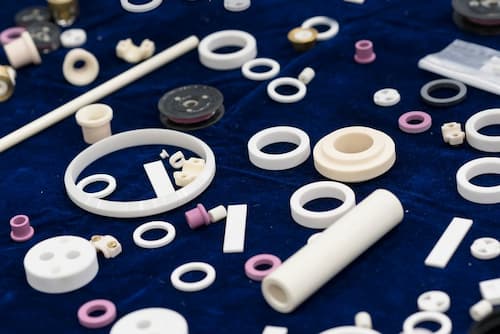 Surviving a single exposure to high heat is one thing, but holding up through repeated cycles over months or years is a much bigger test. Metal can weaken gradually through fatigue or oxidation after enough thermal cycling, and warping frequently follows once that gradual damage builds up, even if no single event pushes it past its rated limit.
Non-metallic technical materials tend to resist that gradual breakdown far better, since their structure doesn’t degrade the same way under repeated thermal stress. Developing components meant to last that long often starts small, and carrying a design from sketch to scale ensures the final version performs exactly as intended once it reaches full production.
That process of proving a concept before committing to large-scale output is often what separates a component that lasts for years from one that fails ahead of schedule.
Who can deliver trustworthy custom ceramic parts?
Choosing the right material can make the difference between a component that performs for years and one that fails under pressure. Wunder-Mold has spent decades helping engineers move heat-sensitive designs from early concept through full production, applying deep material expertise at every stage along the way.
Whether a project calls for tight tolerances or complex geometries, having an experienced partner involved early keeps costly redesigns out of the picture and durability intact under extreme temperatures. From initial material selection through final production, every stage is handled with the same attention to detail and consistency.
If your next project demands components built to withstand serious heat, call right now and let’s talk through what your design needs to succeed.