An alumina component can meet every dimension on its drawing and still cause problems when assembled with metal hardware. A metallized surface might not bond as expected, a mounting feature may experience excessive stress, or a rigid connection could become vulnerable when temperatures change.
These issues often begin with decisions made before the first part is molded. By involving our aluminum oxide ceramic company early in development, you can review your component’s geometry and identify critical assembly surfaces before tooling begins. During ceramic injection molding design, we consider your component’s intended joining method, operating conditions, and critical surfaces before developing the tooling.
Can alumina ceramic be metallized?
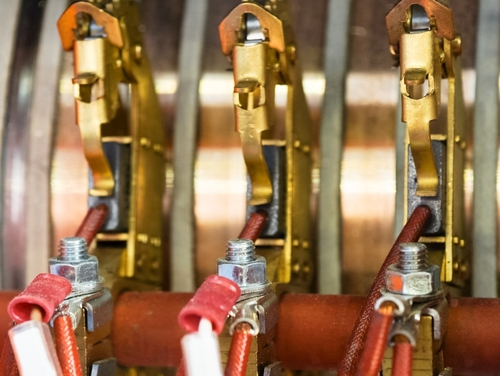
Yes. Alumina can receive a metallic coating that allows it to be joined to metal components through processes such as brazing. Metallization is commonly used when an assembly requires a conductive connection or a bonded interface between ceramic and metal. The selected process must be compatible with the alumina composition and the intended joining method.
How metallization prepares a joining surface
One established technique uses a molybdenum-manganese coating that is applied to the ceramic and fired under controlled conditions. The coating bonds to the substrate, creating a surface that can subsequently receive metal plating.
Nickel plating is commonly used to provide a surface suitable for brazing with conventional filler metals. Active brazing offers another approach. Specially formulated filler metals bond directly to the ceramic without requiring a separate metallization step.
Why joining surfaces matter during design
We recommend identifying surfaces that will require metallization before finalizing the component geometry. A bonding surface may require particular dimensions, accessibility, and finish characteristics. Its position also matters during molding. Because gate placement affects alumina injection molding, we consider critical joining faces during tool design to reduce the risk of defects near these surfaces.
A gate mark may require additional finishing near a critical interface, while a poorly positioned weld line can compromise the component’s structural integrity. By identifying critical joining faces early, we can plan gate placement to help keep marks away from those areas.
Why are some alumina compositions easier to metallize than others?
For example, our 96% alumina grade is well suited to metallization, while higher-purity grades may require different coating formulations or processing conditions. These differences influence how a metallization coating interacts with the ceramic surface. The selected metallization method determines which material characteristics are most important.
The role of composition and glassy phases
Traditional molybdenum-manganese metallization relies partly on interactions involving glassy phases at the ceramic interface. Some lower-purity alumina grades contain secondary phases that support this bonding mechanism. Very high-purity compositions generally contain less of this material, so the coating formulation or process may need adjustment.
High-purity alumina can also be metallized, provided the coating formulation and processing conditions suit the grade. When helping you select an alumina grade, we consider the intended joining process alongside your component’s electrical and mechanical requirements.
Surface condition affects the finished interface
The bonding face must meet the requirements of the selected metallization process. Surface contamination or damage can interfere with consistent coating application and adhesion.
The required finish depends on the coating method and the role of the interface. We also consider how surface finish affects ceramic performance when recommending which functional surfaces need tighter finishing specifications.
How does thermal expansion affect ceramic-to-metal assemblies?
Alumina and metals expand and contract at different rates as temperatures change. When two materials are rigidly joined, that difference can create stress at the connection. The problem becomes particularly important in brazed assemblies because the materials cool from an elevated joining temperature.
Why expansion differences create stress
The coefficient of thermal expansion describes how much a material changes in size as its temperature changes. If the metal contracts more than the ceramic during cooling, the connection can develop residual stresses. Additional temperature changes during operation may alter those stresses.
These thermal expansion differences between materials need to be considered when selecting joining materials and designing the surrounding hardware. Excessive tensile stress near a brittle ceramic interface can contribute to cracking or joint failure.
Designing connections that accommodate movement
The geometry of the joint affects how loads are transferred between the materials.
Several design considerations deserve attention:
- Metal selection: Choose an alloy with thermal expansion characteristics suitable for the intended joint.
- Joining temperature: Account for the temperature range experienced during bonding and cooling.
- Joint geometry: Avoid configurations that concentrate tensile stress at thin sections or sharp transitions.
- Intermediate materials: Evaluate whether a suitable compliant joining layer can accommodate some movement.
- Mounting conditions: Consider the mechanical restraint imposed by surrounding components.
Joining temperatures and subsequent thermal cycles should both be considered when evaluating the connection. Small surface flaws and concentrated loads can also increase the risk of ceramic components cracking during service, particularly when thermal stresses are already present.”
Which professional aluminum oxide ceramic company can help design components for reliable assembly?
Wunder-Mold works with customers to develop precision alumina components around their dimensional and application requirements. Our engineers review part geometry and material selection before developing injection molding tooling.
We handle molding, debinding, and sintering, with post-sintering grinding and honing available when tighter dimensions or specific surface conditions are required. We also offer assembly capabilities and quality inspections throughout production.
If your component will eventually be metallized or joined to metal hardware, share those interface requirements during the design review. We can help plan the molded geometry and critical surfaces around the intended application. Call us today to discuss your drawings and manufacturing requirements.