Wall thickness can make or break a molded ceramic component. A part may look simple on the drawing, but uneven sections can affect filling, debinding, sintering, strength, and final dimensions. For engineers working with a ceramics manufacturer, wall design should be reviewed early so the geometry supports repeatable production instead of creating avoidable defects later in the process.
How does uneven wall thickness affect ceramic injection molding?
Uneven wall thickness creates different flow paths, different drying behavior, and different shrinkage conditions across the same component. In a process that already involves molding, debinding, and high-temperature firing, those differences can quickly affect part quality.
1. It can create filling problems
During injection, feedstock needs to move evenly through the mold cavity. Thin sections may resist flow, while thicker sections may fill more slowly or hold material differently.
When geometry changes too sharply, the material may hesitate, trap air, or create weak areas. This is especially important for small, detailed components where fine features need consistent material distribution.
2. It can increase internal stress
A part with uneven sections does not behave uniformly during processing. Thick areas and thin areas may respond differently as binders are removed and the component moves toward firing.
Those differences can increase stress inside the part. If the geometry is not adjusted early, later inspection may reveal distortion, cracking, or areas that require additional correction.
3. It can affect final dimensions
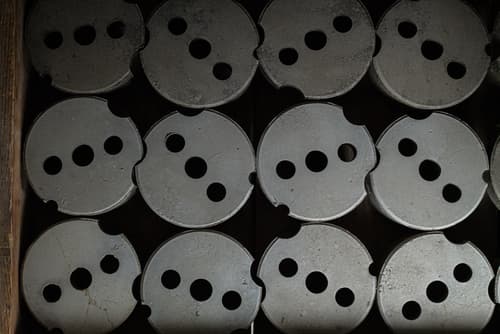
Ceramic parts shrink during firing, and that shrinkage must be planned into the design. When wall sections vary too much, shrinkage may become less predictable from one feature to another.
This is why engineers often review wall design alongside how shrinkage can influence final dimensional accuracy. Because sintering can introduce sintering-related shrinkage and distortion, consistent geometry helps support a more reliable final result.
What wall thickness designs work best in ceramic injection molding?
The best designs usually keep wall sections as uniform as the part function allows. When variation is necessary, transitions should be gradual, intentional, and reviewed before tooling decisions are finalized.
1. Keep sections as consistent as possible
Uniform wall thickness helps the material flow, process, and shrink more predictably. It also reduces the chance that one area of the part will dominate the behavior of the entire component.
This does not mean every feature must be identical. It means the design should avoid sudden changes that create isolated thick masses or fragile thin areas.
2. Use gradual transitions
Some parts need different wall sections for strength, attachment, insulation, or function. When that happens, transitions should be blended smoothly instead of changing abruptly.
Rounded transitions, fillets, and thoughtful geometry can help reduce stress concentration. They also support better flow during molding and more stable behavior during later processing.
3. Avoid unnecessary mass
Overly thick areas may seem stronger, but they can create processing challenges. Extra mass can affect debinding, firing behavior, shrinkage consistency, and the need for post-process correction.
A better approach is to design strength into the part through geometry. Ribs, curves, supports, or adjusted profiles may provide performance without creating excessive bulk.
Why should wall thickness be reviewed early?
Wall thickness should be reviewed before the design is locked because later corrections can be expensive. Once tooling is built, geometry changes become more complicated and may affect cost, timing, and production consistency.
1. Early review can reduce finishing needs
Secondary finishing may still be required for some precision ceramic components. However, good wall design can reduce the amount of correction needed after firing.
This is why wall thickness should be considered alongside considering which finishing steps may be needed after molding. Better geometry at the beginning often leads to a cleaner path through production.
2. Early review supports dimensional stability
Dimensional stability depends on material selection, tooling, process control, firing conditions, and part geometry. Wall thickness is one piece of that larger system.
When thickness is consistent and transitions are well planned, the part is more likely to hold its intended shape. That makes it easier to connect wall design with the factors that help molded components stay stable.
How do I find an experienced ceramics manufacturer?
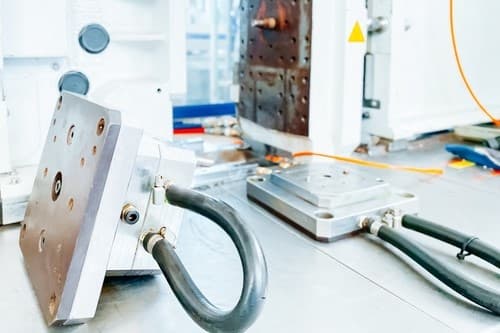
Wunder-Mold brings 29 years of experience in precision injection molding for custom ceramic and thermoplastic parts. As a pioneer in ceramic injection molding, our team supports customers from design assistance through development, production, quality control, secondary finishing, and delivery.
We specialize in customized alumina, zirconia, and thermoplastic components for demanding industries such as aerospace, electronics, healthcare, automotive, oil and gas, and food service. If your part requires careful wall design, tight repeatability, and knowledgeable production support, send us your request today.