Shrinkage is one of the most important realities in ceramic injection molding. It doesn’t mean the process failed, and it doesn’t mean the part was designed incorrectly. Instead, it’s a natural stage of the process that helps these advanced components become dense, strong, and ready for use.
The goal is to keep shrinkage predictable, especially for components that have to match a specific application rather than a standard shape. That’s why ceramic parts manufacturers account for shrinkage early through design, processing, inspection, and finishing. Read on to understand why ceramic parts shrink during sintering and how that expected change affects dimensional accuracy.
Why do ceramic parts shrink during sintering?
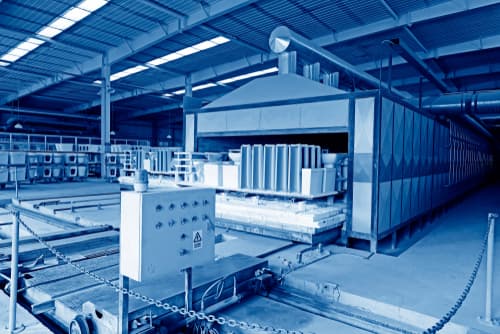 Ceramic components shrink during sintering because the material becomes denser as it’s exposed to high heat. Before firing, the shaped part contains ceramic powder and binder. As the binder is removed and the particles consolidate, empty space between them decreases. The result is a smaller, denser, stronger component.
This size change is expected. In injection molding, manufacturers don’t try to avoid shrinkage entirely. Instead, they work to make it consistent enough that the final fired part lands within the required dimensions.
From molded shape to fired component
The transformation from shaped feedstock to finished ceramic part happens in stages. Each stage changes the material in a specific way, and shrinkage becomes most visible once the part moves through firing.
A simplified path looks like this:
- The feedstock is shaped: Ceramic powder mixed with binder is formed into the desired geometry.
- The binder is removed: During debinding, the other material is carefully removed so the part can move toward a fully ceramic structure.
- The part is fired: High heat consolidates the particles and reduces internal porosity.
- The final geometry is inspected: After firing, manufacturers compare actual dimensions against the intended final specifications.
This is why tooling and process planning matter so much. The part that enters firing isn’t the same size as the finished component. The tool must account for the expected dimensional change so the final result meets the design requirements.
Why shrinkage is expected, not unusual
Shrinkage can sound like a problem if it’s discussed without context. In reality, predictable shrinkage is part of what allows ceramic injection molding to produce strong technical components.
Uncontrolled shrinkage
Shrinkage becomes a concern when it varies from one area to another or from one batch to the next. Uneven behavior can affect tolerances, surface alignment, holes, bores, and mating features. In those cases, the issue isn’t that shrinkage happened. The issue is that it didn’t happen consistently.
Controlled shrinkage
Controlled shrinkage allows manufacturers to plan ahead. Engineers can build expected size change into the tool, monitor firing conditions, and inspect finished parts against known targets. When the process stays stable, shrinkage becomes a managed step of production rather than an unknown variable.
What influences shrinkage behavior
Several factors can affect how a ceramic component shrinks during sintering. Some relate to the material itself, while others come from geometry and process conditions.
Shrinkage behavior can be influenced by:
- Powder composition and particle characteristics
- Binder content and feedstock consistency
- Part geometry and section thickness
- Firing temperature and dwell time
- Furnace atmosphere and cooling control
These factors don’t operate separately. For example, wall thickness can affect firing behavior because thicker sections may respond to heat differently than thinner ones. Even a small change in feedstock consistency can also influence how evenly the part consolidates. That’s why ceramic injection molding depends on careful process control from the beginning of the project through final inspection.
How does shrinkage affect dimensional accuracy?
Shrinkage affects dimensional accuracy because the final part has to meet specifications after firing, not before it. Engineers have to think backward from the finished component and account for the size change that will happen during sintering.
That means the tool, process, and inspection plan all have to support the final fired dimensions. If shrinkage is predictable, dimensional accuracy becomes much easier to manage. If it varies too much, critical features may need extra finishing or redesign.
Tooling must account for final fired dimensions
Tool design plays a major role in managing shrinkage and preserving dimensional stability in ceramic injection molding. Since the formed part becomes smaller during sintering, engineers create the mold cavity with that expected change in mind. The goal isn’t to match the final size at the shaping stage, but to reach the required dimensions after the material densifies.
This is one reason early engineering review matters. If tolerances, wall sections, and critical features are understood before tooling begins, the process can be planned around the final outcome rather than adjusted after problems appear.
Critical features need closer planning
Not every dimension carries the same importance. Some areas only need to meet general size requirements, while others affect fit, sealing, movement, or alignment. Those critical features usually need closer attention because even small dimensional changes can affect performance.
Features that often require careful shrink planning include:
- Inner diameters
- Flat mating faces
- Thin sections
- Alignment features
- Tight-fit interfaces
These areas may also influence whether secondary finishing is needed after firing. A general surface may work as fired, while a bore or sealing face may require refinement to meet its final requirement.
Inspection confirms what firing produced
Inspection after firing confirms whether the expected shrinkage matched the actual result. This step is essential because final geometry can only be verified once thermal processing is complete.
Manufacturers measure critical dimensions, compare them to specifications, and determine whether the component is complete as fired or needs selective finishing. This keeps the process grounded in real data instead of assumption.
Inspection also helps identify trends over time. If a dimension begins shifting across batches, engineers can review process conditions before variation becomes a larger production issue.
 Predictable shrinkage supports repeatable production
 Predictable shrinkage supports repeatable production
When shrinkage behaves consistently, production becomes easier to control. Tooling decisions are more reliable, finishing requirements are easier to plan, and inspection results become more predictable from one batch to the next.
This doesn’t mean every feature comes out finished without adjustment. Some applications still require post-sinter grinding, honing, drilling, or bore finishing. However, predictable shrinkage helps manufacturers decide where those steps are truly needed instead of treating finishing as a broad correction.
In the end, shrinkage is not something to fear in ceramic injection molding. It is something to understand, plan for, and verify. When that happens, manufacturers can produce advanced components that meet demanding dimensional and performance requirements with confidence.
Who are the most dependable ceramic parts manufacturers?
At Wunder-Mold, we account for shrinkage long before a part reaches the furnace. Our team evaluates geometry, feedstock behavior, tooling requirements, sintering conditions, and inspection checkpoints so fired components can reach their intended dimensions with fewer surprises. That planning helps turn shrinkage from a point of uncertainty into a controlled part of ceramic injection molding.
When your project depends on tight dimensions and consistent fired results, we’re ready to help you move from design intent to finished component with confidence. Reach out to us and let’s discuss how our team can support your next project.