Ceramic injection molding is valued for producing detailed, durable components close to their final shape. But for demanding applications that require precision ceramic molding, “close” can still need a final step. Features such as bores, sealing faces, mating surfaces, and tight-fit interfaces may need secondary finishing after firing so the finished part performs exactly as intended.
That extra refinement is often what turns a near-net-shape component into a production-ready one. It helps the most important surfaces and dimensions meet the requirements of the final application without overworking areas that already meet spec. Read on to learn what secondary finishing processes are used after ceramic injection molding and why certain parts need additional refinement before they’re ready for use.
What finishing processes are used after ceramic injection molding?
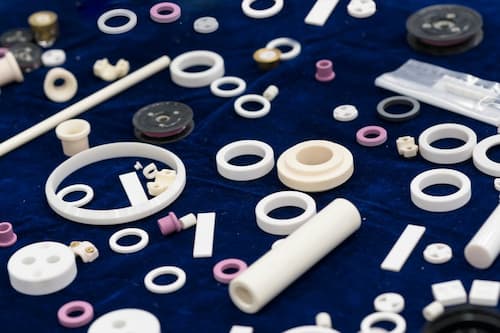 Ceramic injection molding can produce highly detailed near-net-shape components, but some applications need post-sinter finishing to meet final dimensional or surface requirements. The decision depends on how the part will function, which features carry the tightest tolerances, and whether certain surfaces must work closely with other components.
In practice, secondary finishing is usually selective. Manufacturers don’t refine every surface by default. Instead, they focus on the areas that affect fit, sealing, movement, alignment, or long-term performance. Common post-sinter operations may include surface grinding, ID/OD grinding, honing, drilling, bore finishing, and other controlled finishing steps based on final specifications.
Tight tolerance refinement
Some components leave firing very close to their final dimensions, but “close” isn’t always enough. Wall thickness can affect how a component behaves during firing, along with geometry, material distribution, and thermal control. As a result, a general body dimension may work as fired, while a critical contact point, bore, or sealing surface still needs tighter control.
This is where finishing becomes a final accuracy step. Rather than changing the entire part, manufacturers refine only the features that determine function. That approach keeps the process efficient while helping the most important areas meet stricter tolerance requirements.
For example, a component may need one flat face corrected for sealing or one diameter adjusted for a precise fit. The rest of the part may stay untouched because it already meets the application’s needs.
Surface quality requirements
Surface condition affects performance in ways that aren’t always visible at first glance. A surface may look acceptable but still need refinement if it controls friction, sealing, contact pressure, or wear behavior.
A smoother or more controlled surface may be needed when the component must:
- Move against another surface without excessive wear
- Maintain consistent contact under pressure
- Support reliable sealing
- Reduce friction in a repeated-motion environment
- Meet inspection or cleanliness expectations
In these cases, finishing isn’t about appearance. It’s about creating a surface condition that supports predictable performance in the final application.
Internal feature and interface correction
Internal geometry often needs its own attention after firing because small deviations inside a part can affect fit more dramatically than external surfaces. Holes, bores, inner diameters, and alignment features may need refinement so shafts, pins, fasteners, or mating components seat correctly.
Internal diameters
When an internal opening must accept another component, small changes in roundness or diameter can matter. Honing, drilling, or grinding can bring that opening into the required range without affecting unrelated areas of the part.
Mating interfaces
Interface features are the points where the part connects, supports, seals, or aligns with another component. If those areas aren’t refined properly, the final assembly may experience stress, misalignment, or inconsistent contact.
This kind of finishing is highly targeted. The goal isn’t to rework the part broadly, but to make sure the connection points behave as intended.
Assembly fit considerations
A component can meet its own drawing requirements and still create challenges inside a larger assembly. This is especially true when multiple parts interact under tight tolerance conditions. A slight surface variation may not matter on its own, but it can create alignment issues once the part contacts another component.
Secondary finishing supports dimensional stability in ceramic injection molding by bringing fit-critical features into tighter control. This is why assembly fit often requires more than basic dimensional checks. Manufacturers look at how the part behaves in context, not only how it measures on its own.
Post-sinter dimensional adjustment
Teams can confirm final geometry only after firing is complete. Since technical ceramics shrink during sintering, manufacturers inspect fired components after thermal processing to see how material shrinkage affected final dimensions before choosing which areas to adjust.
A typical path may look like this:
- The part is formed close to final shape.
- Binder removal and firing consolidate the material.
- Inspection confirms which dimensions meet specification.
- Only the critical areas that need refinement move to finishing.
This sequence allows forming and firing to do most of the shaping, while post-sinter finishing brings the most demanding features into final tolerance. It’s a controlled refinement strategy, not a sign that the earlier process failed.
Why secondary finishing supports production consistency
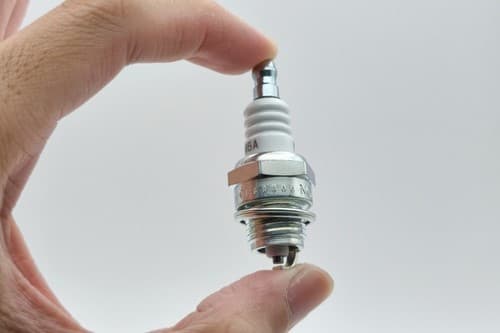
Secondary finishing also helps keep repeat production stable. Once engineers identify which features need refinement, those operations can become part of the standard production plan instead of a late-stage correction.
That matters because critical surfaces and interfaces need to behave the same way from batch to batch. When teams plan finishing early, manufacturers can better control inspection points, lead time expectations, and final part performance.
In that sense, secondary finishing supports the larger goal of ceramic injection molding: producing complex, high-performance components that meet demanding requirements with consistency.
Who provides reliable precision ceramic molding with finishing?
At Wunder-Mold, we know that production-ready ceramic components often need more than forming and firing alone. Our team helps customers review part geometry, tolerance needs, surface requirements, and post-sinter finishing options early, so every critical feature has a clear path to final specification.
From grinding and honing to drilling, bore finishing, and other secondary operations, we bring the technical experience needed to support consistent results from start to finish. If your project calls for ceramic injection molding with reliable finishing support, contact us and let’s discuss the best way to bring your part to its finished, production-ready form.